Blog
What Is a Merle Yorkie? Is It Purebred or a Mix?


IIf you’ve searched “merle Yorkie,” you’ve probably noticed two things: the photos are stunning, and the explanations online are… messy. Some pages call merle “a rare Yorkie color,” others say it’s impossible, and a lot of listings lean hard into hype words like exotic, teacup, diamond line, and ultra rare.
This guide is here to explain what people mean by “merle Yorkie”. What their coat looks like and what you should ask about genetics and health before you believe what breeders are saying. With merle Yorkies, the questions are more important than the photos.
If you also want to learn more about Yorkie colors you can read this guide: Yorkshire Terrier Colors: From Standard to Rare Ones.
Quick answer: what is a merle Yorkie?
A “merle Yorkie” usually means a Yorkie-type dog (often a mix) that shows the merle pattern—a marbled/mottled look where some areas of pigment are diluted and other areas stay fully pigmented.
That definition matters because merle is a pattern gene, not simply a cute color label.
Also the official rules for Yorkshire Terriers say that the classic coat is blue and tan and merle is not considered a color for Yorkies.
This does not mean that a dog, with a merle pattern cannot be a pet. It means you should be careful and understand what you are getting especially if someone is asking you to pay a lot of money for a ” color” merle Yorkie.
Is merle an official Yorkie color?
In the traditional breed-standard context, Yorkshire Terriers are described by the classic blue-and-tan look, and other colors/combos are treated as unacceptable/disqualifying in that standard framework.
If you want to check the standards yourself, here are two authoritative references:
- American Kennel Club Yorkshire Terrier standard (PDF).
- The Kennel Club Yorkshire Terrier standard page.
Why this matters for your blog post (and your readers):
When people search “merle Yorkie,” many are really asking one of these questions:
- “Is this dog actually a purebred Yorkie?”
- “Is merle safe?”
- “Am I being scammed with ‘rare color’ marketing?”
Addressing the breed-standard reality early improves trust signals and keeps the post aligned with search intent—especially after core updates where Google tends to reward pages that feel transparent and well-sourced.
What “merle” actually means
Merle is widely described as an incompletely dominant coat pattern where the coat shows irregular patches of diluted pigment alongside fully pigmented areas.
Two practical things to know:
1) Merle is not “just a color”
Merle changes how pigment shows up. The dog’s base color (black-based vs chocolate-based, for example) affects how the merle pattern looks on the coat.
2) “Hidden” (cryptic) merle exists
Not every merle dog looks obviously merle. Some dogs have subtle merle expressions that’s easy to miss, which is one reason visual guesses are not a safe substitute for genetic clarity.
If you want an easy-to-understand, science-first page on merle testing, UC Davis Veterinary Genetics Laboratory explains the merle pattern and its presentation in a clear way.
And if you want a deeper dive into how the merle pattern is linked to changes in the PMEL (SILV) pigmentation gene and why expression can vary, PubMed Central has accessible research summaries.
The 8 “merle Yorkie” coat looks you’ll see online
Before we list these, a helpful disclaimer (and it’s an important credibility point):
These labels are not official Yorkie coat categories. They’re common words used in listings and social posts. Your goal isn’t to memorize trendy names—it’s to recognize the look and ask the right questions.
1) Blue merle & tan
What it looks like: grey/black marbling with tan points on the face, legs, and chest (similar placement to classic Yorkie tan points).
What to ask: Are either parents merle? Was merle ever paired with merle? Do they have objective hearing/eye test results?
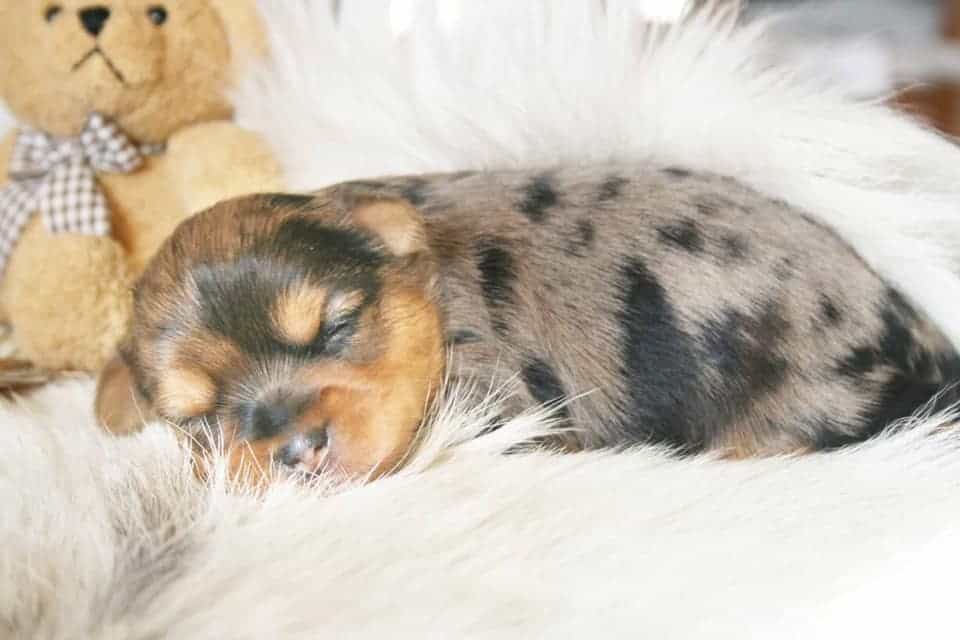
2) Blue merle (minimal tan)
What it looks like: strong merle marbling, but tan points are faint, patchy, or barely present.
Common marketing line: “Ultra rare!”
Reality: merle expression varies, and puppy coats often change as they mature.
3) Chocolate merle
What it looks like: brown-based merling (cocoa + lighter patches instead of black + grey).
What to ask: Can they confirm the base color genetics and merle status via testing, or are they guessing from photos?
If you want to understand chocolate coloring in Yorkie conversations more generally (separate from merle), here’s a focused guide: Chocolate Yorkie: Rare Coat Color.

4) Chocolate merle & tan
What it looks like: chocolate merle pattern plus tan points.
What to ask: Can they show adult dogs from the same lines? (Not just “perfect puppy pics.”) Do they provide health documentation?
5) Red merle (sometimes called “strawberry” or “rust” merle)
What it looks like: warm reddish base with lighter mottling.
Why readers get confused: the label “red merle Yorkie” is often used casually online, and it can be a sign the dog is a mix—because coat presentation depends heavily on what’s in the background.
6) Merle parti (white base with merle patches)
What it looks like: lots of white with merle patches, sometimes with tan points.
Why to slow down: heavy white + merle is a “take testing seriously” situation. At minimum, you want transparency and proof of responsible breeding choices.
If your reader is curious about the “white Yorkie” topic specifically (which also gets a lot of hype online), you can link them here: White Yorkshire Terrier Facts.
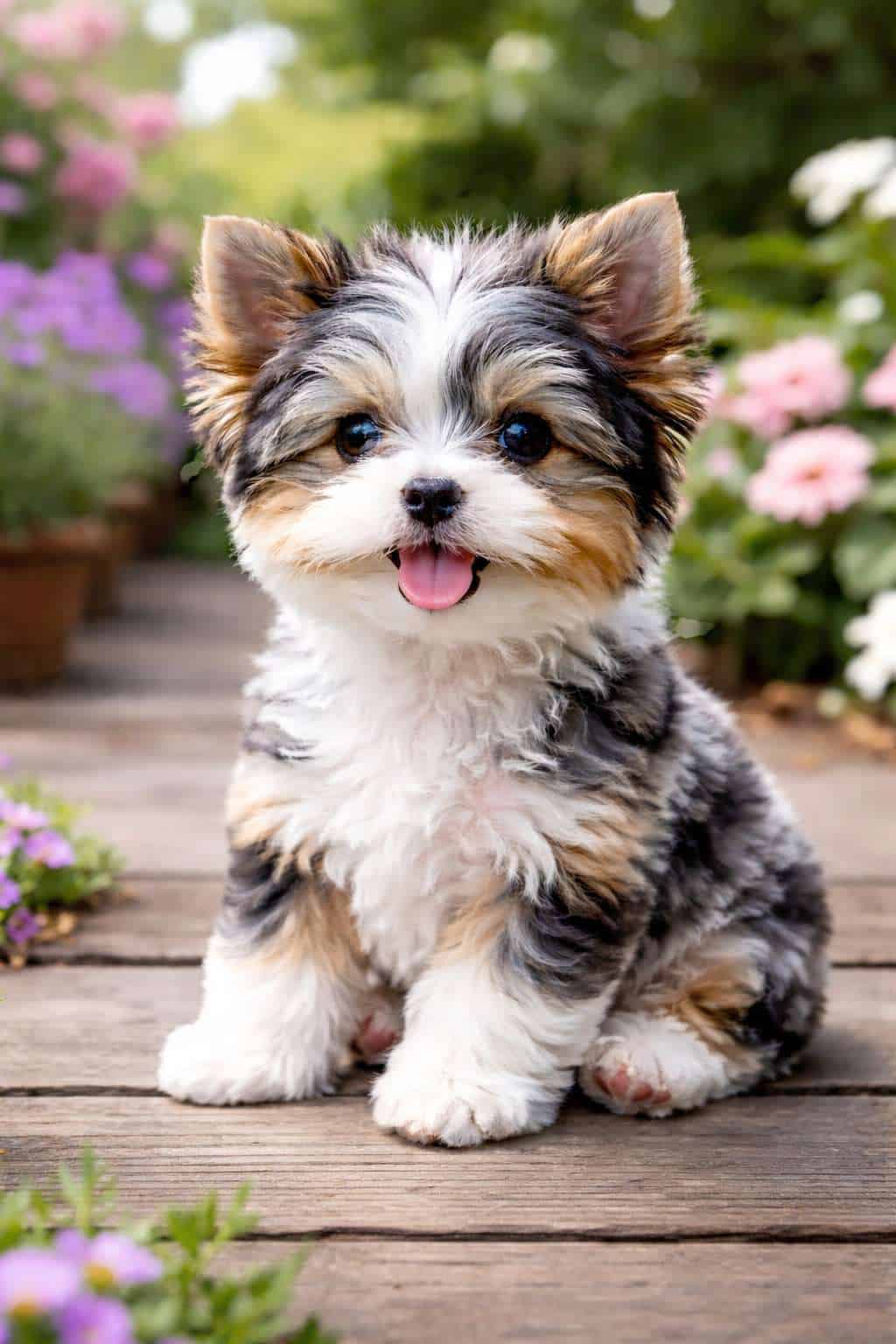
7) Dilute merle (“lilac/isabella”)
What it looks like: softer, washed-out contrast in the merle pattern.
What to ask: Are they using genetics terms accurately, or stacking trendy words to justify a price tag?

8) Minimal / cryptic merle
What it looks like: the dog appears mostly solid or traditional-looking, with only a small merle patch or faint mottling.
Why it matters: some merles are not obvious, and that’s one reason reputable breeders and responsible owners rely on evidence—not vibes—especially when breeding is involved.
Merle vs other “rare Yorkie color” conversations
A lot of confusion comes from mixing these ideas together:
- Merle = a pattern that changes pigment distribution
- Chocolate = a brown pigment base (can exist with or without merle)
- Blue = can refer to coat shading (and is also discussed in standard contexts as “blue and tan,” depending on source)
- White/parti = often discussed as white patterning/markings (not the same mechanism as merle)
If your readers want a broad overview of uncommon looks people talk about online, link them here: Rare Yorkie Colors: Exotic and Unusual Yorkie Coat Variations.
And if they’re specifically researching the “blue Yorkie” topic (which gets mixed up with merle all the time), this is a strong internal follow-up: The Blue Yorkshire Terrier Coat Color.
The health topic you must understand: “double merle”
This is the section most hypey listings skip—but it’s one of the biggest reasons merle discussions should include ethics.
What “double merle” means
When two merle-patterned dogs are bred together, some puppies can inherit merle from both parents (often called “double merle”). This is associated with a higher risk of hearing and vision problems, which is why many reputable sources advise avoiding merle-to-merle pairings.
A clear, reader-friendly explainer is available from American Kennel Club about merle, including hidden/cryptic merle and why “don’t breed two merles together” is the safest baseline.
What health testing to look for
If someone is selling a merle-patterned Yorkie-type puppy, a responsible buyer should be able to ask (politely, but firmly) about:
- BAER hearing test results (objective hearing assessment)
- Eye exam results (ideally by a veterinary ophthalmologist)
- routine vet care records (vaccines, deworming, general wellness checks)
- any genetic testing they claim to have done (ask for proof, not screenshots of texts)
If the seller responds with pressure (“someone else will buy today”) or refuses basic transparency, treat that as a strong signal to walk away.
A simple “Should I buy this merle Yorkie?” decision tree
Use this as a quick, practical filter:
- Do they clearly explain what the dog is?
- If they’re transparent about “Yorkie mix” or background: good sign.
- If they insist “purebred rare color Yorkie” but won’t explain standards/genetics: pause.
- Do they provide proof of health/testing?
- If yes (with real documentation): continue.
- If no: do not reward the listing with your money.
- Do they avoid merle-to-merle breeding?
- If yes: good sign.
- If they don’t know what you’re asking—or act annoyed: leave.
- Do they care where the puppy goes?
- Good breeders ask you questions too.
- Scammy sellers focus only on deposits and “rare color.”
Buyer checklist: 12 questions that protect you from scams
Here’s a buyer checklist your readers can literally copy/paste into a message:
- Are either parents merle (visibly or by genetic test)?
- Have you ever bred merle-to-merle?
- Can I see clear photos of both parents (and ideally adults from prior litters)?
- Do you have BAER hearing results (puppy or line)?
- Do you have eye exam results?
- What adult weight range do you expect (not “teacup” marketing)?
- What temperament do you see in your adults (energy level, sociability, anxiety)?
- What support do you offer after adoption (questions, guidance, take-back policy)?
- What is your contract regarding congenital issues?
- What vet care has the puppy already received, and what is the schedule?
- Can you explain merle in simple terms and how you avoid risky pairings?
- Are you open about the dog being a mix (if that’s the case)?
Red flags that usually mean “don’t buy”
- “Rare merle teacup Yorkie” with no proof, no parents shown, no testing mentioned
- refusal to answer basic health/genetics questions
- pressure tactics around deposits
- endless focus on color and price, zero focus on welfare or long-term care
Green flags worth highlighting
- calm, transparent answers
- documentation without excuses
- breeder focuses on health, temperament, and stable placements
- the seller is comfortable saying, “This dog is a Yorkie mix,” if that’s the truth
If you already own a merle-patterned Yorkie-type dog
This is where I like to be reassuring: most day-to-day care is still “Yorkie care.” Coat pattern doesn’t automatically change your dog’s needs. But there are a few practical things to keep in mind.
Grooming basics (Yorkie rules still apply)
Most Yorkie-type coats do best with:
- regular brushing to prevent mats
- careful trimming around eyes, ears, and paws
- gentle bathing (over-bathing can cause dryness/irritation). Check my blog post where I wrote how to choose the best shampoo for a Yorkie.
If your dog’s coat texture is more “mix-like” (fluffier, thicker, or more shedding), your routine may shift a bit—more undercoat brushing, different tools, etc.
Skin and sun sensitivity
Some lighter-pigmented areas may be more sensitive. You don’t need to panic; just pay attention:
- avoid harsh shampoos
- watch for irritation, redness, or itchiness
- talk to your vet if you notice recurring skin problems
Hearing and vision: what to watch for
If you suspect hearing issues, you might notice:
- sleeping through loud noises
- not reacting to name/commands
- startling easily when approached from behind
If you suspect vision issues, you might notice:
- hesitancy in low light
- bumping into objects in unfamiliar spaces
- anxiety on stairs
“Are merle Yorkies hypoallergenic?”
You’ll see Yorkies called hypoallergenic all the time, but the most accurate wording is:
- Yorkies are often lower-shedding, which some people tolerate better,
- but no dog is truly allergen-free, because allergens are related to proteins found in dander, saliva, and more—not just hair.
- Yorkies have human-like fur, so they don’t shed like other dogs. Their hair is shed daily but in less amounts.
FAQs
Are merle Yorkies rare?
They’re uncommon in traditional Yorkie lines, but “rare” is also a marketing word. The label alone doesn’t prove anything.
Are merle Yorkies purebred?
Often, merle suggests crossbreeding somewhere in the background. If “purebred” is claimed, ask for documentation and transparent explanation.
Do merle Yorkies have more health problems?
Merle doesn’t guarantee problems. The bigger risk is how merle is bred, especially merle-to-merle pairing and lack of testing.
Do merle coats change with age?
Yes. Many puppies shift in shade and contrast as they mature. Therefore, it’s not surprising to see your Yorkie change its color shade as it ages. Blue Yorkies can become more ‘’gray’’, while white Yorkshire terriers can get more ‘’yellowish tone of fur’’.
Buying a Merle Yorkie Puppy
A merle-patterned Yorkie-type dog can be a loving, incredible companion. Their striking coats, playful personalities, and affectionate nature make them a wonderful addition to any household. However, it’s essential to consider the health risks associated with the merle gene and ensure you’re purchasing from a responsible breeder. With proper care, a merle Yorkie can bring many years of joy and companionship into your life.