Blog
Yorkshire Terrier Colors: From Standard to Rare Ones


Yorkshire Terriers may be tiny, but they sure pack a lot of personality—and a lot of color! If you’ve ever wondered what coat colors Yorkies come in, you’re in the right place. In this casual guide, we’ll walk through the classic AKC-recognized Yorkshire Terrier colors (like the famous Blue and Tan) and then venture into the world of rare Yorkie colors (ever heard of a Parti or Chocolate Yorkie?). We’ll also chat about how these coat colors can affect the price of a Yorkie – including which color variation might be the most expensive Yorkie of all.
Standard Yorkie Colors (AKC-Recognized)
The American Kennel Club (AKC) recognizes four official color combinations for Yorkshire Terriers. These standard Yorkie colors are the ones you’ll typically see in the show ring or in classic breed descriptions.
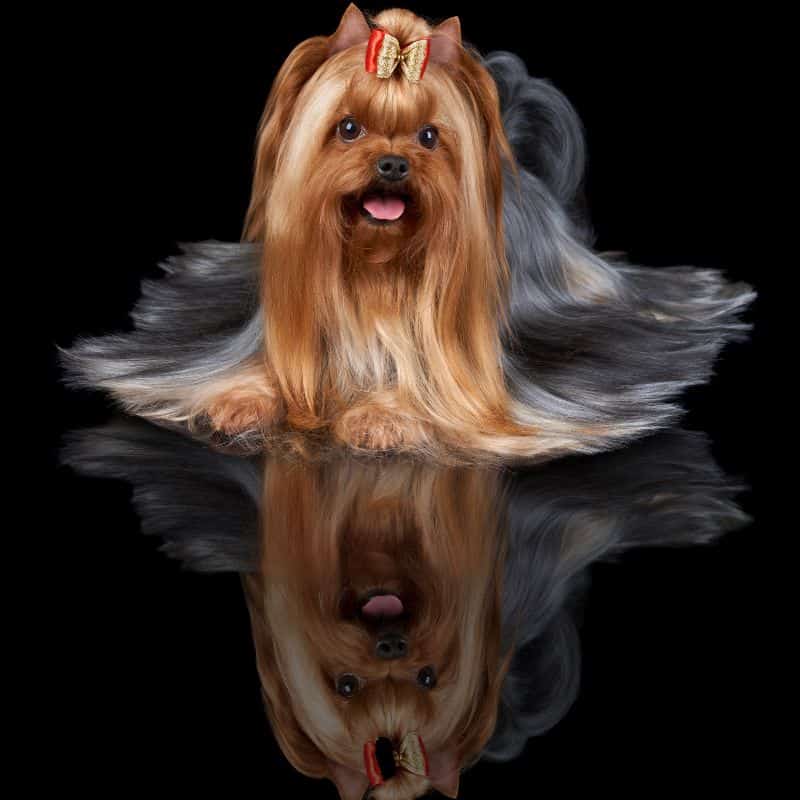
Blue and Tan Yorkie
This is the iconic Yorkie coat most people picture. Adult Yorkshire Terriers usually develop a dark steel-blue color on their body (often called a “blue saddle”) with rich tan on the face, chest, and legs. Blue and Tan Yorkies start life black and tan as puppies, and over time the black darkens to a blue-gray sheen while the tan fur remains on the head and limbs.
The tan can range from a deep bronze to a lighter golden hue. This classic Yorkshire terrier color is fully recognized by the AKC and is prized in the show ring for its sharply defined contrast.
In terms of price, a standard Blue and Tan Yorkie puppy from a reputable breeder might cost around $1,000–$1,500 on average, depending on pedigree and location (baseline for comparison with rarer colors).
Blue and Gold Yorkie
The Blue and Gold coat is very similar to Blue and Tan – the difference is mostly in the shade of the lighter areas. In a Blue and Gold Yorkie, the “tan” parts are a richer, brighter gold color instead of a tan/bronze.
The body is still a dark blue-gray, but the head and chest fur shines like pale gold. Some Yorkie enthusiasts simply consider this a variation of the standard blue/tan. The AKC registration form indeed allows “blue & gold” as one of the official color choices.
A Yorkie with a Blue and Gold coat will typically be priced similarly to Blue and Tan, since both are standard colors (often in the $1,000–$1,500 or up to ~$2,000 range for pet-quality puppies). The gorgeous glossy contrast of blue and golden fur is purely aesthetic – it doesn’t make the pup any healthier or more valuable in terms of companionship.
Black and Tan Yorkie
Black and Tan is another standard combination you might see, especially in Yorkshire Terrier puppies. In fact, almost all Yorkie pups are born with black and tan coats – the black on the body and tan points on the face and legs.
As they mature, that black may begin to lighten into the blue steel color. Some adult Yorkies may retain a deeper black shade on their back instead of turning blue-grey (especially if not from show lines).
Black and Tan is an acceptable color per AKC records, although the ideal show coat for a mature Yorkie is the blue steel. A Black and Tan Yorkie (if it stays black) will still have the signature tan markings.
There’s no price difference for a black-backed Yorkie versus a blue-backed one – both are standard. You can expect similar prices (~$1,000–$1,500) for a pet-quality Black and Tan Yorkie pup. The coat color will not affect their quality as a pet at all.
Black and Gold Yorkie
Rounding out the AKC-recognized colors is Black and Gold. This is essentially a Yorkie with a black saddle (body) and lighter golden hair on the head and legs. Think of it as the puppy black remaining, paired with a lighter gold (instead of tan) on the points.
Some Yorkies might mature into a black and gold combo if their coat doesn’t develop the blue dilution. It’s less common in show circles (since most aim for the blue), but it is still an official color combination you can register.
In appearance, a Black and Gold Yorkshire terrier color has a high-contrast look – the jet black fur against a bright gold head. In terms of cost, it’s on par with the other standard colors. A black and gold pup will usually be in the same price range as other standard Yorkies. Breeders typically won’t charge extra for this color since it’s not considered rare or non-standard.
Rare and Non-Standard Yorkie Colors
Now it gets really interesting – beyond the traditional colors, Yorkshire Terriers can come in rare coat colors that fall outside the breed standard. These unique Yorkie colors often happen due to recessive genes or crossbreeding and are not officially recognized in the show ring.
However, they have become popular with some pet owners and breeders who love the unusual looks. Below we cover the most well-known rare Yorkie color variations, including what causes them, how they look, and how they might affect price.
Parti Yorkie (Tri-Color)
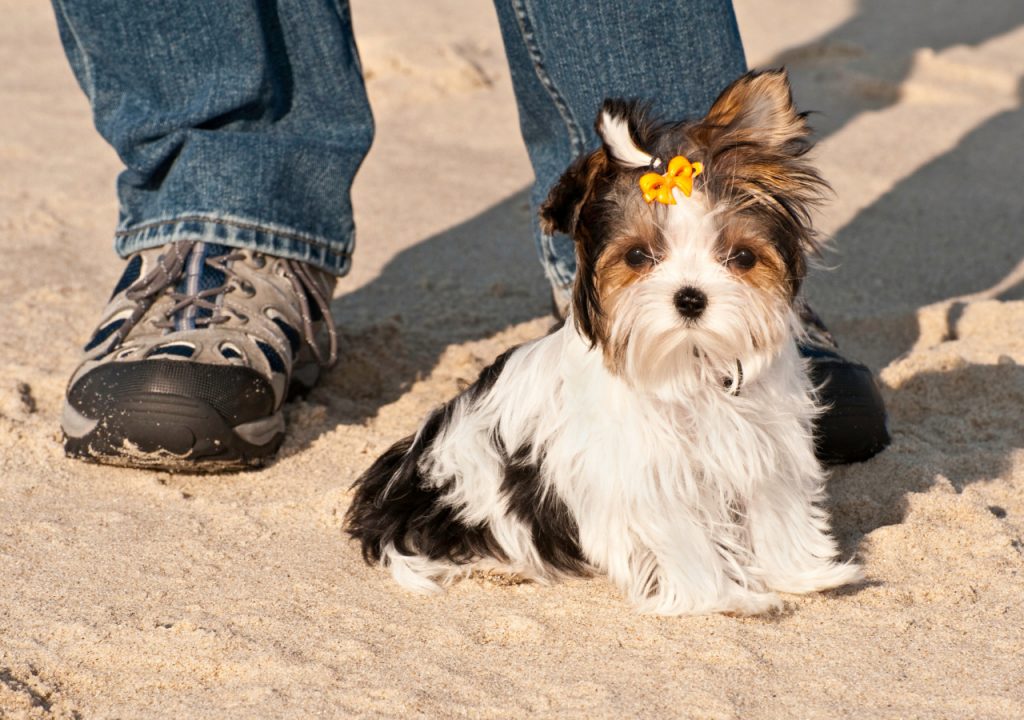
A Parti Yorkie has a striking tri-color coat: typically white mixed with black (or blue) and tan patches, giving a piebald or spotted appearance. This is very different from the solid saddle of a standard Yorkie. The Parti coloration is caused by a recessive piebald gene that some Yorkies carry.
For a Parti Yorkie to be born, both parents must carry this recessive gene, which is why Parti Yorkshire terrier colors are quite rare. In the past, Parti-colored Yorkies were often hidden or even culled by breeders because the color was considered a fault.
Nowadays, Parti Yorkies are gaining acceptance among pet owners, and the AKC even allows them to be registered as Yorkshire Terriers (AKC will not deny registration based on color). Still, the Yorkshire Terrier Club of America’s breed standard disqualifies this color for shows, labeling it “incorrect” for the breed.
From a looks perspective, Parti Yorkies often have white on the chest, belly, and legs, with black and tan (or sometimes blue and tan) on the head and patches on the body. They almost resemble a little calico or spotted dog – super cute and unique! Because they’re rare, breeders often charge a premium for Parti puppies.
It’s noted that a Parti Yorkie tends to be very expensive when found. On average, Parti Yorkie puppies might range roughly $1,500 to $3,500+, depending on lineage – often at least a bit higher than a standard-colored Yorkie. The novelty and rarity of their tri-color coat drives up demand (and price).
Chocolate Yorkie (Liver)
As the name suggests, a Chocolate Yorkie sports a brown-colored coat. This happens when a Yorkie has genes that reduce black pigmentation, resulting in a brown (liver) color instead of the usual black or blue.
A chocolate Yorkie typically will be brown and tan (or brown and gold) in pattern – basically where a normal Yorkie is black, this Yorkie is chocolate brown. Their noses and foot pads are often a liver/brown color as well, instead of black.
This color is not standard for Yorkies. It’s the result of a recessive genetic trait that must be present in both parents (sometimes referred to as the b locus or brown gene in coat color genetics). Chocolates are fairly rare, though not as scarce as Partis in some regions. They are not show-standard (the Yorkie clubs consider it a mis-color), but they can be AKC registered as Yorkshire Terriers (just recorded as an alternate color).
Chocolate Yorkshire terrier colors are quite beautiful to behold – imagine a rich bronze coat on a Yorkie. Because of their rarity, some breeders market them as exotic and may charge higher prices. A Chocolate Yorkie puppy can cost anywhere from around $2,000 up to $3,500 or more, roughly double the price of a standard color in some cases. Keep in mind, color doesn’t affect the pup’s temperament or health per se, but the novelty factor drives up demand.

Golden Yorkie (Blonde)
A Golden Yorkie (sometimes called a Blonde Yorkie) is a sight to see – these dogs are solid gold or tan in color, lacking the typical blue/black saddle on the body. Essentially, the entire coat is a shade of golden blonde. This occurs when a Yorkie produces only pheomelanin (red/gold pigment) and little to no black pigment.
In genetics terms, it’s a recessive trait on the extension locus that stops the black color from expressing (one famous example is often called an “EE Golden”). The result is a Yorkie that might look like a little golden teddy bear – often a shiny cream or light amber coat all over.
Golden Yorkies are non-standard in color (the breed standard calls for a blue saddle, so a totally gold dog doesn’t meet that). They are sometimes born from two standard-colored parents who each carry the recessive gene for a gold coat.
While gold-only Yorkies are uncommon, they do pop up occasionally. Show breeders typically avoid producing them on purpose, but some specialty breeders focus on these “exotic” blond Yorkies.
In terms of price, Golden/Blonde Yorkies can be on the higher end as well. Expect to see prices around $2,000 or more for a purely golden coat Yorkie puppy, though prices vary. Their rarity and gorgeous look (they almost look like a tiny silky Shih Tzu or Maltese mix, due to the coloring) make them desirable to some.
Just remember – even a totally golden Yorkie is still 100% Yorkshire Terrier by blood; only the color is different. And aside from coat color genetics, they’ll behave just like any other Yorkie!

Biewer Terrier (Biewer Yorkie)
The Biewer Terrier deserves a mention here because it’s directly related to Yorkshire Terriers and involves a unique color pattern.
The Biewer (pronounced “Bee-vair”) originated from Yorkies in Germany in the 1980s. Essentially, a pair of Yorkies produced puppies with white patches (Parti-color), and a new line was developed.
The Biewer Terrier is now recognized as a separate breed by the AKC, but many people still think of them as a type of “Yorkie color variation.” Biewer Terriers have a tri-color coat very similar to Parti Yorkies – typically white, black, and tan in a piebald pattern.
What sets them apart (besides being a distinct breed now) is a particular emphasis on the saddle pattern and certain breed standards unique to Biewers.
If you see a Yorkie-like dog with lots of white on it (and maybe even a tail not docked, since Biewers often keep their full tail), you might be looking at a Biewer Terrier or a Parti Yorkie. Biewers are bred separately from Yorkshire Terriers today, but they share common ancestry.
If you’re interested in the tri-color look, you might encounter both Parti Yorkies and purebred Biewer Terriers. Price-wise, Biewer Terriers can be quite expensive as well – often in the $3,000–$5,000 range for puppies, since they are a newly recognized breed with limited breeders. It’s a case where rarity, novelty, and breeding costs (importing lines from abroad, etc.) keep the price high. One thing to note: because the Biewer is a separate breed, if you buy a Biewer Terrier you’ll register it as a Biewer, not a Yorkshire Terrier. Parti Yorkies, on the other hand, register as Yorkies. It’s a subtle distinction important for breed enthusiasts.
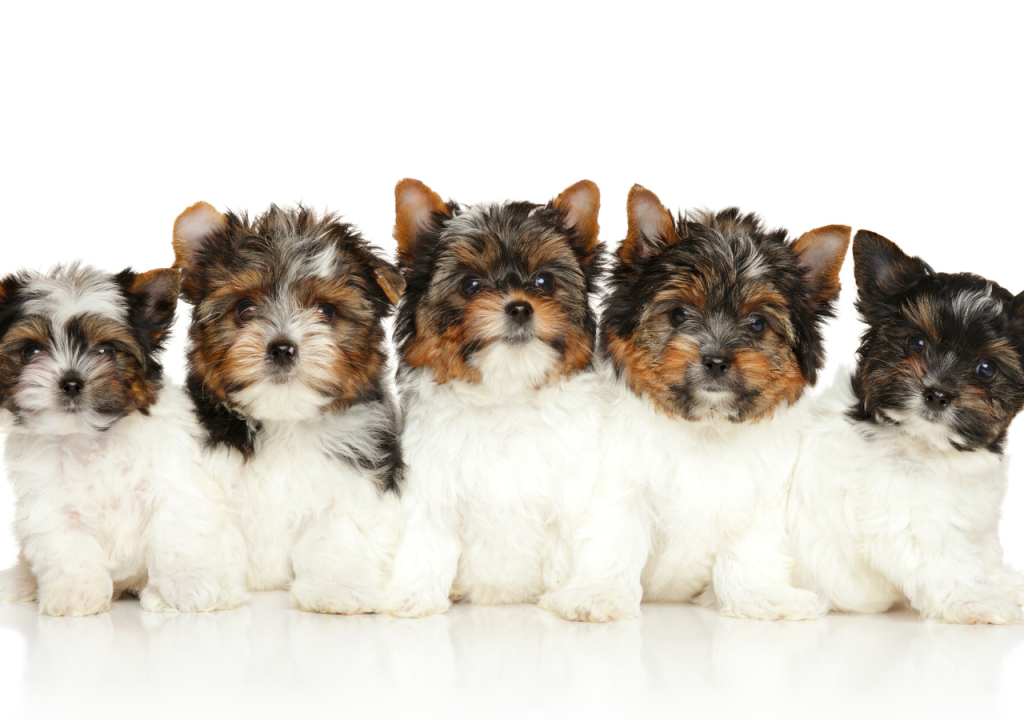
Merle Yorkie
Merle is perhaps the most controversial and unusual pattern appearing in “Yorkie” circles. A Merle Yorkie has a dappled or mottled pattern on the coat – patches of diluted color mixed with regular color, somewhat like an Australian Shepherd or Dachshund’s coat pattern.
Traditionally, merle pattern did not exist in Yorkshire Terriers, and its appearance suggests that somewhere along the line a Yorkie was crossbred with another breed that carries the merle gene. (Common breeds with merle include Chihuahuas, Dachshunds, and Collies, so an introduction from one of those could be the culprit.)
Because of this, merle-coated Yorkies are not recognized by the AKC or Yorkie clubs as legitimate purebred colorations. In fact, the Yorkie Club specifies that unusual combinations not in the standard should be disqualified – which would include merle.
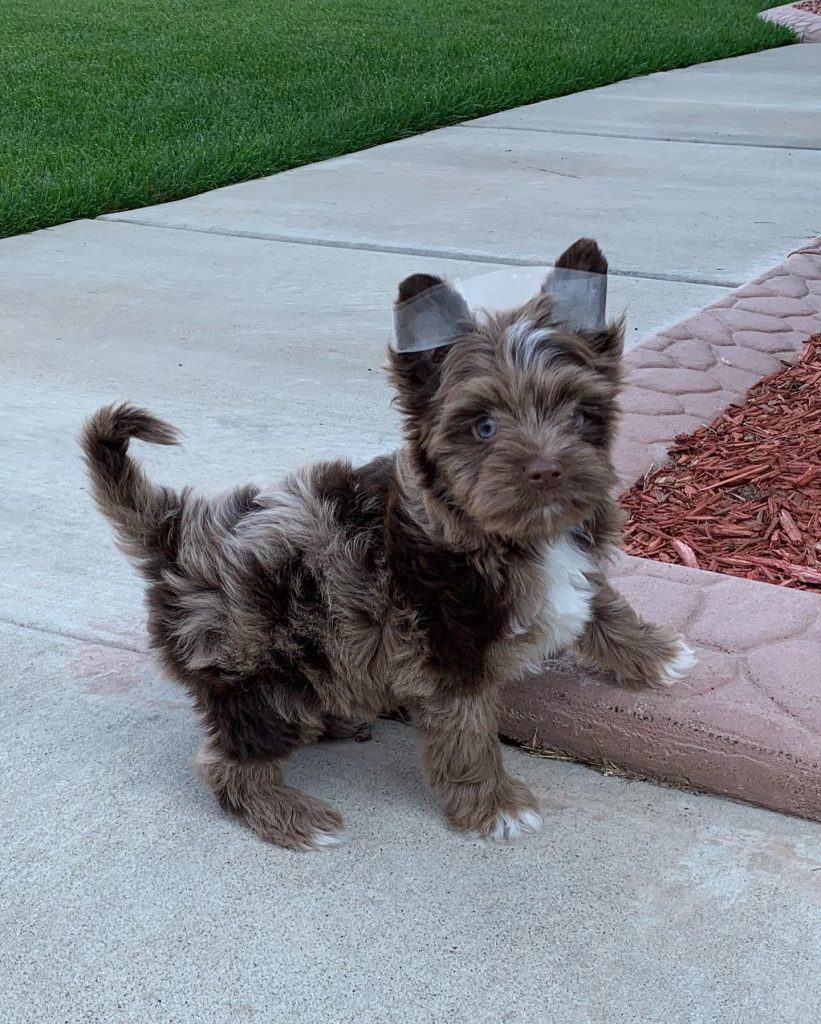
Exotic yorkies come at high price
That said, some breeders do advertise “Merle Yorkies” or sometimes called “Chocolate Merle Yorkies” (if a brown merle) as exotic pets. These dogs might have blue or odd-colored eyes and patches of different colors on their fur (for example, a mix of tan, white, and gray-blue patches).
It’s critical to know that the merle gene can come with health issues – in many breeds, merle dogs can have higher risk of hearing or vision problems, especially if two merles are bred together. So, caution is advised. Many reputable Yorkie breeders refuse to produce merle patterns to avoid these issues and because it strays from the breed standard.
If you do come across a Merle Yorkie for sale, be aware it’s extremely rare (and likely not pure Yorkie in the strict sense). The price might be sky-high – some quote $4,000–$6,000 or even more – due to the “novelty” factor. However, approach such offers carefully, and do your research on the breeder. Merle is a striking pattern, but it’s not part of the traditional Yorkie heritage.
“Teacup” Yorkies (Extra Small)
Okay, this one is about size, not color – but you’ll often see “Teacup Yorkie” mentioned as a special type of Yorkie, so it’s worth discussing. A Teacup Yorkie isn’t a color variation at all; it’s a term used for extra-small Yorkshire Terriers, typically those that end up significantly below the standard weight (the breed standard is ~7 pounds maximum).
These tiny pups (sometimes 3–4 pounds or even less fully grown) are called “teacup” as a marketing term. There is no separate AKC classification for a Teacup Yorkie – they are just small Yorkies.
Because of their cutesy size and rarity (it’s not easy to breed healthy extremely small puppies), unscrupulous breeders sometimes charge a premium for teacups. It’s not unusual to see “teacup” Yorkies being sold for $2,500–$5,000 or more. The most expensive Yorkie listings often involve this term combined with a rare color (for example, a “teacup merle Yorkie”) to jack up the price.
While a tiny Yorkie might sound adorable (and they truly are heart-meltingly cute), prospective owners should know that teacup Yorkies can have extra health challenges. Their small size makes them more prone to issues like hypoglycemia, fragile bones, and other problems.
Always be cautious and research the breeder if you’re considering a teacup-sized dog. In many cases, it’s better to aim for a healthy, standard-sized Yorkie. They’re all lap-sized dogs anyway, and a 5-7 pound Yorkie can accompany you just as easily as a 3-pound one (with a bit less risk). In summary – teacup refers to size, not color, but it’s a buzzword that heavily influences price.

Yorkie Color Chart: Standard vs. Rare Colors and Prices
To sum up the coat variations and give a quick comparison, here’s a Yorkie color chart that contrasts the standard colors with some rare ones, including typical appearances and average price ranges for each:
| Color Variation | AKC Standard? | Coat Description | Average Price (USD) |
| Blue & Tan (adult) | Yes ✅ | Steel-blue body; tan on face/chest/legs | ~$1,000–$1,500 (standard) |
| Blue & Gold | Yes ✅ | Steel-blue body; light gold on head/legs | ~$1,000–$1,500 (standard) |
| Black & Tan (puppy/coat) | Yes ✅ | Black body; tan points (often puppy coloration) | ~$1,000–$1,500 (standard) |
| Black & Gold | Yes ✅ | Black body; gold points (variation of puppy colors) | ~$1,000–$1,500 (standard) |
| Parti (Tri-color) | No (Off-standard) | White base with black/blue & tan patches | ~$1,500–$3,500 (rare) |
| Chocolate (Liver) | No (Off-standard) | Solid brown replacing black; tan/gold points | ~$2,000–$3,000 (rare) |
| Golden (Blonde) | No (Off-standard) | Solid golden/blonde coat, no dark saddle | ~$2,000–$3,000 (rare) |
| Biewer Terrier (tri-color) | Separate Breed | White/black/tan tri-color (similar to Parti) | ~$2,500–$4,000 (rare breed) |
| Merle (dappled pattern) | No (Off-standard) | Mottled patches of color (brown/grey/white mix) | ~$4,000–$6,000 (extremely rare) |
| “Teacup” size | N/A (Not a color) | Extra-small Yorkie (any color) | ~$2,000–$5,000 (premium size) |
Note: The prices above are rough estimates for comparison. Standard color Yorkies are generally the most affordable (aside from the regular differences in breeder quality or bloodlines).
Rare Yorkshire terrier colors often cost more – sometimes double or more the price of a traditional Yorkie. The most expensive Yorkshire terrier colors tend to be those that combine rarity factors (for example, a tiny “teacup” Yorkie with a rare coat color could cost a small fortune). Remember, these are just averages – actual prices can vary by region and breeder.
What Is the Most Expensive Yorkie Color?
If you’re wondering which Yorkie color variation tends to command the highest price, the answer usually comes down to supply and demand. The rarest Yorkshire terrier colors often fetch the most money. Based on current trends, Parti-colored Yorkies (the tri-color white/black/tan) are often cited as among the most expensive, since they are rare and highly sought-after. Many breeders charge a premium for Parti Yorkies, sometimes making them the costliest option available from a litter.
That said, Merle Yorkies (being extremely scarce) can sometimes surpass even Parti prices – we’ve seen quotes well above $5,000 for a merle, especially if it’s also a tiny teacup size. However, since merle is not an accepted pure color and comes with controversy, some would argue the title of “most expensive Yorkie” belongs to the Parti or even the Biewer Terrier (which, as a separate breed, can be pricey to import and purchase).
In summary, you can expect Parti Yorkies to be at the top end of Yorkie price ranges in many cases. One reason is simply rarity – it’s “very rare to get a particolour” Yorkie, and when found they tend to be very expensive.
Additionally, anything marketed as “exclusive” or “exotic” (be it a color like merle/chocolate or a tiny teacup size) can drive the price up. The most expensive Yorkie color isn’t a scientifically official title, but in practice, the Yorkies that combine rarity, demand, and novelty (like a Parti-colored Yorkie or a Merle Yorkie) often top the price charts. It’s not unheard of for such puppies to cost several thousand dollars each.
Conclusion: Choosing Your Favorite Yorkshire Terrier Colors
When it comes to Yorkshire Terrier colors – whether blue and tan or rare Yorkshire terrier colors like chocolate and parti – it’s clear these little dogs offer a delightful palette of options. Prospective owners should enjoy the variety, but also remember that color is only fur-deep. Every Yorkie, regardless of coat color, has the potential to be a loving, feisty, and devoted companion.
Breed experts note that an unusual coat doesn’t make a Yorkie any better (or worse) as a pet. So, while it’s fun to seek out that perfect color and even pay extra for a rare look, make sure you’re also considering the breeder’s reputation, the puppy’s health, and personality.In the end, the best Yorkie for you is the one you connect with – be it a classic Blue & Tan or a trend-setting Parti. All Yorkshire terrier colors have that big-dog attitude in a small body and will color your life with love! Enjoy your search for your new furry friend, and treasure every moment with your Yorkshire Terrier, no matter what coat they wear.
READ ALSO: Do Yorkies Have Hair or Fur?