Blog
What Is A Chocolate Yorkie? Where To Find It & What’s Their Price


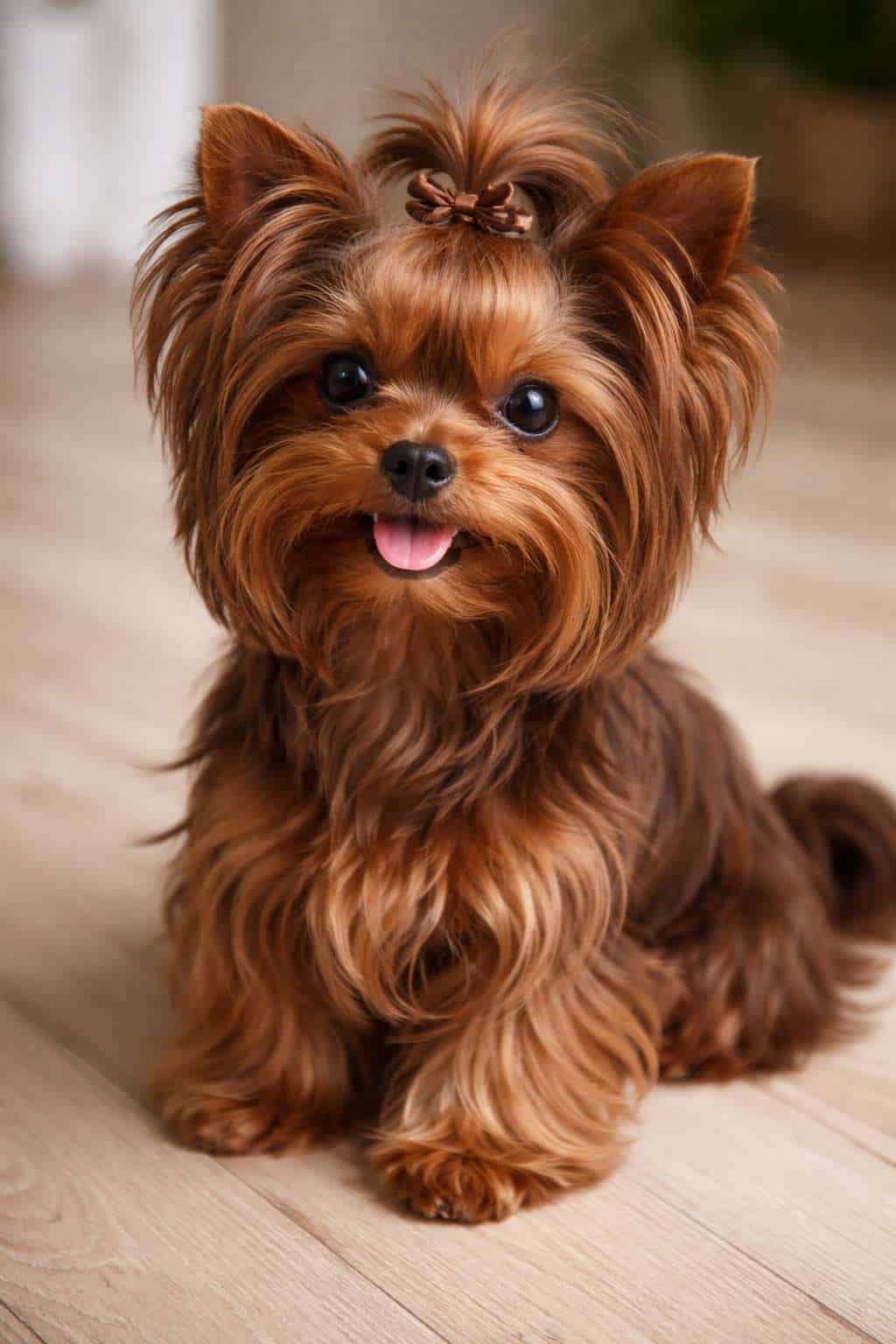
A Chocolate Yorkie is a special color variation of the well-known Yorkshire Terrier breed. It is not a separate breed, but a Yorkie with a brown, “chocolate” coat color. This color appears when a Yorkie inherits two recessive b alleles of the TYRP1 gene, which replaces the standard blue-and-gold coloring with a beautiful brown shade. Simply put, a chocolate Yorkie looks just like a regular Yorkie—small, lively, and energetic—except its coat is darker brown, resembling milk or dark chocolate.
Genetics and Coat Colors of a Brown Yorkshire Terrier
The chocolate pigment in Yorkies comes from a recessive gene. When a dog inherits two copies of this gene, the usual black pigment is diluted into brown. Interestingly, in some cases there is a so-called KB chocolate Yorkie. When the dominant black (KB) gene combines with two recessive b alleles, it suppresses other colors, producing a solid chocolate coat without the typical black-and-tan markings. In these dogs, the eyes and nose are also brown instead of black.
In practice, chocolate Yorkies can appear in shades ranging from deep hazelnut-bronze to warmer golden-brown tones. You may also hear these dogs referred to as “red Yorkies” or liver-and-tan Yorkies, due to the reddish hues that can appear on the legs or muzzle.
However, official breed standards do not recognize dark brown as an accepted Yorkshire Terrier color.

According to FCI and AKC standards, adult Yorkies should be steel blue with tan/golden markings on the head and legs. All other color variations are considered non-standard. The AKC does allow chocolate Yorkies to be registered (often listed as liver-and-tan), but they are not eligible for conformation shows. So while chocolate Yorkies are genetically legitimate, they are a rare and exotic color that cannot be shown in the ring.
Are Chocolate Yorkies Purebred or Mixed Breed?
Is a chocolate Yorkie purebred or a mix? According to most experts, a chocolate Yorkie can be a completely purebred Yorkshire Terrier, provided both parents are properly bred Yorkies that carry the recessive gene. As noted by experts at The Dog Tale, chocolate puppies can be born from two purebred parents who both carry the b gene. In other words, breeding two Yorkies that both carry this recessive trait can naturally result in a brown puppy.
That said, caution is necessary. Some irresponsible breeders cross Yorkies with other small breeds (such as Chihuahuas or Manchester Terriers) just to produce brown puppies. For this reason, buyers should always request pedigree papers and registration certificates (AKC or a recognized kennel club). Reputable breeders are transparent and willing to show breeding conditions and documentation. As a general rule, if the dog comes from a legitimate pedigree program, it can be considered a purebred Yorkie—just in an uncommon color.
Appearance and Temperament of Choco Yorkshire Terriers
The only visible difference between a chocolate Yorkie and a standard Yorkie is coat color. Chocolate Yorkies have silky hair with brown tones. Sometimes the undercoat appears darker, while the tips—especially around the face and legs—are lighter, as pheomelanin (gold/tan pigment) blends with the brown base. Their eyes are usually light brown or greenish, and the nose is brown rather than black.
Everything else remains the same. A Yorkie is still a very small dog (usually under 3 kg), with a slim body, erect ears, and long, silky hair if left untrimmed. Temperament is not affected by color: chocolate Yorkies are just as playful, energetic, intelligent, curious, and sometimes stubborn as their blue-and-gold relatives. In short, the only exception is the coat color.
Sizes and Variations (Teacup, Toy, etc.)
Chocolate Yorkies come in the same size categories as standard Yorkies. There are standard Yorkies (up to about 3 kg), as well as popular teacup and toy varieties. A teacup chocolate Yorkie may weigh only 1–2 kg as an adult. Such tiny dogs require special care and are often more expensive.
You may also encounter chocolate Yorkie Poo (Yorkie × Poodle), Yorkie-Chihuahua mixes, or other crosses that carry the chocolate gene, but these are not purebred Yorkshire Terriers. Occasionally, you’ll see chocolate merle Yorkies or chocolate parti Yorkies (with white patches), which are additional color pattern variations.
The chocolate color usually lasts a lifetime, though it may fade slightly with age. Many chocolate Yorkies develop lighter tips over time, creating a “golden chocolate” effect—this is a natural change, not a flaw.

Where to Buy a Chocolate Yorkie and What’s the Price?
Because they are rare, chocolate Yorkies are typically more expensive than standard-colored Yorkies. Prices commonly range from $2,000 to $6,500 USD for a purebred chocolate puppy. Breeders often justify the premium by citing the rarity of the color. Be cautious of unusually low prices, as they may indicate a lack of pedigree or potential health issues.
In Europe, prices are often similar, roughly €1,800–€6,000, depending on breeder reputation and location. Always ask about transportation or international shipping if the puppy is coming from abroad, as this affects total cost.
Reputable breeders are transparent and prioritize health over color. When contacting a breeder, ask for:
- Pedigree papers for both parents
- Health certificates and veterinary records (including genetic tests if available)
- Photos of the parents
- References from previous buyers or the option to visit the litter
- Details about how the puppies are raised and socialized
Kennel clubs like the AKC can help verify registration. Remember: because this color is rare, ethical breeders will never breed only for color—health and temperament should always come first.
Care and Grooming of a Chocolate Yorkie
Caring for a chocolate Yorkie is essentially the same as caring for any Yorkie. Regular brushing or trimming is required, depending on the chosen style. Popular grooming styles include the puppy cut (short and even) and the teddy bear cut (slightly longer and fluffy). Coat color does not change grooming needs.
Routine care should also include ear cleaning, dental hygiene, nail trimming, and regular vet checkups.
Diet and feeding
Yorkies are prone to hypoglycemia, especially very small or teacup dogs, so they benefit from frequent, small meals. You should choose high-quality dog food with adequate protein. In case you’re not sure what type of diet to choose for your Yorkie, I advise you to read the following blog post:
What is the Best Food for a Yorkie Puppy? The Ultimate Guide
Fresh water should always be available. Yorkies are sensitive to extreme temperatures, so avoid very hot or very cold conditions.The water you give your choco Yorkie should be at a moderate temperature, around 20°C.
Health Concerns of Chocolate Yorkshire Terriers
Chocolate Yorkies don’t have color-specific health problems. They’re prone to the same conditions as all Yorkies, including:
- Patellar luxation
- Dental issues
- Tracheal collapse
- Eye conditions like PRA
Most health issues come from poor breeding—not coat color. A well-bred chocolate Yorkie can live a long, happy life.

Frequently Asked Questions (FAQ)
Q: What is a chocolate Yorkie?
A: A chocolate Yorkie is a Yorkshire Terrier with a darker, brown coat. Genetically speaking, the usual black-and-gold pigment is replaced by the recessive b gene, giving the dog a dark chocolate color instead of the standard one. Everything else—size, body structure, and behavior—remains the same as in a regular Yorkie.
Q: Are chocolate Yorkies purebred?
A: They can be. If both parents carry the recessive b gene, a purebred chocolate puppy can be born. However, it’s always important to check documentation—sometimes dogs are mixed breeds (for example, crossed with other small terriers) that only imitate the color. Reputable breeders provide pedigree papers and AKC registration numbers and have no issue proving the dog’s lineage.
Q: How much do chocolate Yorkies cost?
A: More than standard-colored Yorkies. Prices usually range from $2,000 to $6,500 USD per puppy. In Europe, prices are often similar in euros (approximately €1,800–€6,000). Teacup varieties are typically at the higher end of the range, often $3,000+ USD. For example, one listing for a teacup chocolate Yorkie required a $2,000 deposit. (Always be cautious if the price is significantly lower than this range.)
Q: Where can I buy a chocolate Yorkie?
A: Specialized breeders in the U.S. (Florida, Texas, and other states) and in Europe occasionally have chocolate litters. You can search online using terms like “chocolate Yorkies for sale” or contact kennel clubs for recommendations. In Serbia and the surrounding region, they are still quite rare, so puppies are often imported from abroad. Always check the breeder’s reputation—prioritize those with official kennel club certifications, health guarantees, and who allow you to see the puppies in person.
Q: Are there any special care differences for a chocolate Yorkie?
A: No special differences—care is the same as for any Yorkshire Terrier. Daily brushing and regular grooming are needed, especially for long coats. Diet is also the same: high-quality dog food formulated for small breeds. The only thing to watch closely is feeding frequency—because of their tiny size, they often need multiple small meals per day to prevent low blood sugar. Otherwise, care is identical to that of a standard blue-and-gold Yorkie.
Q: We often hear the term “chocolate parti Yorkie” — what does that mean?
A: Parti means that, in addition to the base color, the dog has white patches. So, a chocolate parti Yorkie has a brown primary coat with noticeable white markings (on the chest, head, or legs). This happens when the dog carries a gene for white coloring in addition to the b gene. These dogs are even rarer.
You may also hear the term blond chocolate—this refers to Yorkies that carry a dominant blond (blue-brown) gene combined with the b gene. Coat-color genetics are complex, but in all cases, these are still Yorkshire Terriers—just in less typical colors.
Q: Do chocolate Yorkies “see” or sense things differently?
A: No. Coat color does not affect vision or hearing. The only difference may be eye color (light greenish or light brown in chocolate Yorkies), but this does not mean better or worse eyesight. Temperament depends on upbringing and individual personality, not color. A chocolate Yorkie is just as happy to see you as any other Yorkie—coat color makes no difference.
Q: What are popular names for chocolate Yorkies?
A: Many owners choose color- or food-inspired names such as Coco, Brownie, Mocha, Latte, Choco, Milo, and similar. For females, names like Butterscotch or Hazel are also popular. Of course, classic Yorkie names (Molly, Max, Bella, Rocky, etc.) are just as common—there are no special naming rules for chocolate Yorkies.
Q: Where can we see photos of chocolate Yorkies?
A: The internet is full of photos of Yorkies in various colors. Try searching “chocolate Yorkie dogs” or browse Instagram using hashtags like #chocolateyorkie. You’ll find plenty of pictures of both puppies and adult dogs in brown shades. Owners often share photos on forums as well.
Q: Are chocolate Yorkies rare, and can they be exported?
A: Yes, they are definitely rarer than standard-colored Yorkies. Because of this, they can be expensive and are often traded internationally. If you’re considering importing one (for example, from the U.S. or the EU), be sure to check customs regulations and veterinary requirements. International transport typically requires vaccinations and health certificates. It’s best to work with a trusted breeder or a reputable kennel club professional.